How Do You Iron On Transfers for Flawless Custom Designs?
At its core, ironing on a transfer seems simple enough. You take a design, place it on a textile, and use a hot iron to apply the heat and pressure needed to make it stick. But the real expertise—and often, the frustration—lies in getting that bond just right, so the adhesive truly becomes one with the fabric fibers.
If you’ve ever watched a design peel up after the first wash or struggled to get that clean, professional finish, you know what we're talking about. This guide is for makers, Etsy sellers, and small business owners who are tired of generic advice and ready for professional techniques that deliver lasting quality.

Beyond Just "Making It Stick"
The goal isn't just to get a design to adhere for a little while. It's about creating a durable, beautiful product you can sell with confidence. Using a household iron is an accessible way to turn a simple fleece or sherpa blanket into a high-value custom item, but only if it’s done right.
It all starts with the textile you choose. While your technique is critical, the quality of your blank canvas can make or break the final product. We've seen it countless times: cheap, thin materials scorch under heat or simply don’t have enough fiber for the transfer’s adhesive to grab onto, resulting in a design that just won’t last.
For any print shop owner or custom goods business, the quality of your blank is a direct reflection of your brand.
At Spark Blank Textiles, our philosophy is built on this very idea. As textile specialists, we believe a high-quality blank isn't just an expense—it's the single most important ingredient for creating a premium product you're proud to put your name on.
What We'll Cover in This Guide
So, let's get into the details that separate an amateur attempt from a professional result. We're going to break down the specific heat, pressure, and timing settings you need for different materials, especially those tricky plush fabrics that can be so heat-sensitive.
We’ll focus on practical, actionable advice that you can start using immediately, including:
- Setting Up for Success: Getting the right tools and surfaces ready.
- Fabric-Specific Instructions: How to handle premium materials like our sherpa and fleece blankets without damaging them.
- Troubleshooting Common Mistakes: Quick fixes for peeling vinyl, crooked designs, and other frequent issues.
By the end, you'll have the knowledge to move past the guesswork and start creating impressive, long-lasting custom pieces every single time.
Getting Your Tools and Materials Ready
Before you even plug in your iron, let’s talk about what you need on hand. Getting your materials sorted out first is the secret to a project that looks professional and, more importantly, doesn’t end in frustration.
The term "iron-on" actually covers a few different types of transfers, and knowing which one to use is half the battle. This is great news for creative businesses because it gives you tremendous flexibility in the products you can offer.
It’s no surprise that this industry is booming. The market for heat transfer paper alone hit $541.1 million in 2024, and it's still climbing. That number represents countless small businesses and creators making amazing custom products, often using high-quality textiles to make their work shine.
First, Pick Your Transfer Type
You’ll primarily be choosing between Heat Transfer Vinyl (HTV) and printable transfer paper. They look similar but serve very different purposes.
-
Heat Transfer Vinyl (HTV): This is your workhorse for solid-color designs, text, and logos. It comes on rolls or sheets in tons of colors and finishes like glitter, metallic, or even a fuzzy flocked texture. You'll need a vinyl cutter to cut your design, but the result is a crisp, durable finish that looks incredibly sharp.
-
Printable Transfer Paper: If your design is a full-color photograph or has complex gradients and shading, this is what you need. You simply print your image onto the paper with a regular inkjet printer. We break down the whole process in our guide to using heat transfer printer paper.
Think about your end product. Is it a bold, single-color logo for a promotional blanket? Go with HTV. Is it a custom tapestry featuring a family portrait? Printable paper is the only way you'll get that detail.
The Big Question: Iron vs. Heat Press
Let's be realistic about your heat source. Can you get great results with a standard household iron? Yes, absolutely. It's how most of us start, and with patience and proper technique, you can make it work perfectly.
The catch with a home iron is its uneven heat. The center is always a hot spot, the edges are cooler, and those steam holes create little cold zones. This means you have to keep the iron moving constantly while applying serious, even pressure to make sure the entire design adheres properly.
A heat press, on the other hand, is designed specifically for this. It delivers consistent heat and pressure from corner to corner, every single time. If you find your business growing, investing in a heat press is a game-changer for your workflow and consistency.
The Most Important Piece: Your Blank Textile
You can have the best transfer and the best equipment, but if you put it on a cheap, flimsy blank, the whole project is compromised. The quality of your textile is what makes or breaks the final product.
You wouldn't drop a powerful engine into a car with a rickety frame. In the same way, applying a beautiful, detailed transfer to a low-quality blanket undermines all of your effort. The adhesive needs a solid foundation of fibers to grip onto for a bond that lasts.
This is exactly why we are so passionate about our curated selection of textiles. A thick, plush blank like a 300 GSM fleece or a luxe 430 GSM sherpa gives the transfer a much better surface to bond with. The dense fabric structure not only helps the design adhere perfectly but also ensures it holds up through washing, keeping both the transfer and the blanket looking and feeling great.
A Few Must-Have Accessories
Finally, there are a couple of small items you absolutely cannot skip. They protect both your project and your equipment.
-
Protective Sheet: Always place a Teflon sheet or even a piece of parchment paper over your transfer before pressing. This simple step prevents the transfer's plastic carrier sheet from melting onto your iron and protects the fabric from getting scorched.
-
A Firm Pressing Surface: This is a big one. Do not use your padded ironing board. The squishy padding absorbs all the pressure you're trying to apply, and lack of pressure is the number one reason transfers fail. Instead, work on a hard, flat surface like a sturdy table or even the floor. You can place a folded towel down to protect the surface, but make sure it’s firm.
Getting it Right: From Fabric Prep to the Final Peel
Alright, you’ve got your supplies laid out and your workspace is clear. This is where the magic happens, but it’s also where tiny mistakes can make the difference between a project that looks professional and one that just looks… homemade. Getting a perfect, long-lasting transfer isn't just about applying heat; it's a series of small, deliberate steps.
Let's walk through the entire process, from getting your fabric ready to that satisfying moment you peel back the carrier sheet.
It All Starts with Prep, Not Pressing
It's tempting to jump right in and start ironing your design, but a crucial first step is to pre-heat your fabric. Lay your Spark Blank Textiles blanket or towel on your firm pressing surface and give it a good iron for about 10-15 seconds.
This quick step is a game-changer for two reasons. First, it zaps any wrinkles, giving you a perfectly smooth canvas. Second, and more importantly, it burns off any hidden moisture in the fabric. You can't see it, but that moisture can turn to steam and ruin your transfer’s ability to adhere properly.
After you pre-heat, let the fabric cool for just a second. Now you're ready to place your design. Take your time here! Nothing screams "amateur" like a crooked design. Use a ruler to ensure your transfer is perfectly centered and straight. For larger items like a fleece throw, a great trick is to fold the blanket in half and press a light crease down the middle—an instant centerline.
The Big Three: Heat, Time, and Pressure
This trio is the absolute core of ironing on a transfer. Getting the balance right is everything. Since your home iron doesn't have a digital temperature display, you'll be working with its built-in fabric settings.
- Heat: Most heat transfer vinyl (HTV) is happiest on the "Cotton" or "Linen" setting, which is usually around 300-320°F. This is critical: make sure your iron's steam function is OFF. Steam is the number one enemy of a good bond.
- Time: You'll typically press each section for 15 to 30 seconds. You probably won't be able to cover a large design in one go, so you’ll need to press in slightly overlapping sections.
- Pressure: This is the one people always underestimate. You need to apply firm, even pressure using your body weight. Seriously, lean into it! This is why a sturdy table is a must-have; a wobbly ironing board will just absorb all that force.
The relationship between your materials and your tools is what determines your success. You need the right transfer, the right tool, and the right textile all working together.

When you're ready to press, cover your design with a Teflon sheet or piece of parchment paper. Start in one corner and press down hard for the full recommended time. Then, lift the iron straight up and move it to the next section, overlapping the previous spot just a little. Whatever you do, don't slide the iron around like you're ironing a shirt—that's a surefire way to wrinkle or shift your design.
We can't stress this enough: The number one reason vinyl peels is not enough pressure. If your transfers are failing, the first thing you should do is push harder. You really have to make up for what a home iron lacks in weight.
For anyone who starts making items in batches, all that manual pressing gets old fast. It's often the main reason people upgrade their gear. If you find yourself in that boat, looking into a swing-away heat press will open your eyes to a new world of efficiency and consistency.
The All-Important Peel
After you've pressed the entire design, it’s time for the big reveal: removing the clear plastic carrier sheet. But don't just rip it off. Check your HTV instructions to see if it’s a "hot peel," "warm peel," or "cold peel." Following this direction is non-negotiable for a clean result.
Here’s a quick breakdown:
- Hot Peel: Peel the carrier sheet off immediately after lifting your iron. The adhesive is made to release while it's still piping hot.
- Warm Peel: Wait a few seconds (usually 5-15) for the transfer to cool down just a bit before peeling.
- Cold Peel: You have to let the item cool down completely. This might take a minute or two. If you peel too soon, you’ll pull the vinyl right off with the plastic.
When you do peel, pull the carrier sheet back slowly and at a sharp angle, almost folding it back on itself. As you peel, watch the design closely. If you see any part of the vinyl starting to lift, stop. Just lay the plastic and your protective sheet back down and press that one spot again for another 10-15 seconds. That almost always fixes it.
Once the carrier sheet is off, we like to do one final press for just 2-3 seconds, with the protective sheet over the bare design. This helps lock it in and gives it maximum durability. Now, you’re done! Stand back and admire that perfect transfer—it’s ready to become a favorite gift or a new best-seller.
Customizing Different Textiles With The Right Technique

Anyone can press a design onto a basic cotton tee. The real skill comes from knowing how to work with trickier fabrics—the plush, textured, and premium materials that make for truly special products. This is where high-quality blanks make all the difference, but you still need the right technique to avoid costly mistakes.
Different fabrics have their own personalities when it comes to heat and pressure. The good news? Once you understand those quirks, you can confidently apply transfers to just about anything, including the beautiful, soft materials in the Spark Blank Textiles collection. It's all about tailoring your approach to the textile.
The demand for personalized goods has exploded, turning heat transfer vinyl (HTV) into a massive industry. In 2022, the HTV market hit USD 265.32 million and it's still climbing, all thanks to e-commerce and people's desire for unique items. If you want a deeper look at the numbers, you can read the full research on HTV market trends here.
The Challenge of Plush Fabrics Like Sherpa and Fleece
Plush fabrics like our 430 GSM Sherpa Sublimation Throws and 300 GSM Fleece Throws are best-sellers for one simple reason: they're unbelievably soft. But that cloud-like texture can feel a little intimidating when you're about to press it with a hot iron. The biggest worry is melting or crushing those delicate fibers.
For these high-pile polyester materials, your game plan should revolve around two things: a lower temperature and a protective sheet. You can't just crank up the heat the way you would for cotton.
Here’s our experienced advice:
- Always Use a Protective Barrier: A Teflon sheet or a simple piece of parchment paper is non-negotiable. It acts as a buffer, spreading the heat out evenly and keeping your iron from making direct, melty contact with the polyester.
- Turn Down the Heat: Skip the "Cotton" setting. You’ll want to be on "Polyester" or "Wool," which usually lands you in the 305-320°F range. This is the sweet spot for getting adhesion without damage.
- Press in Short Bursts: Instead of one long, 30-second press, try pressing firmly for 10-15 seconds at a time. Lift the iron, check your work, and press again if the transfer hasn't fully bonded. This method prevents heat from soaking in and ruining the fabric.
A common mistake is using too much muscle and flattening that gorgeous plush texture. You want just enough firm, even pressure to bond the adhesive. Don't try to squish the life out of it. If the fibers around the design look a little matted afterward, you can usually fluff them right back up with your fingers.
Working with Textured Woven Tapestries
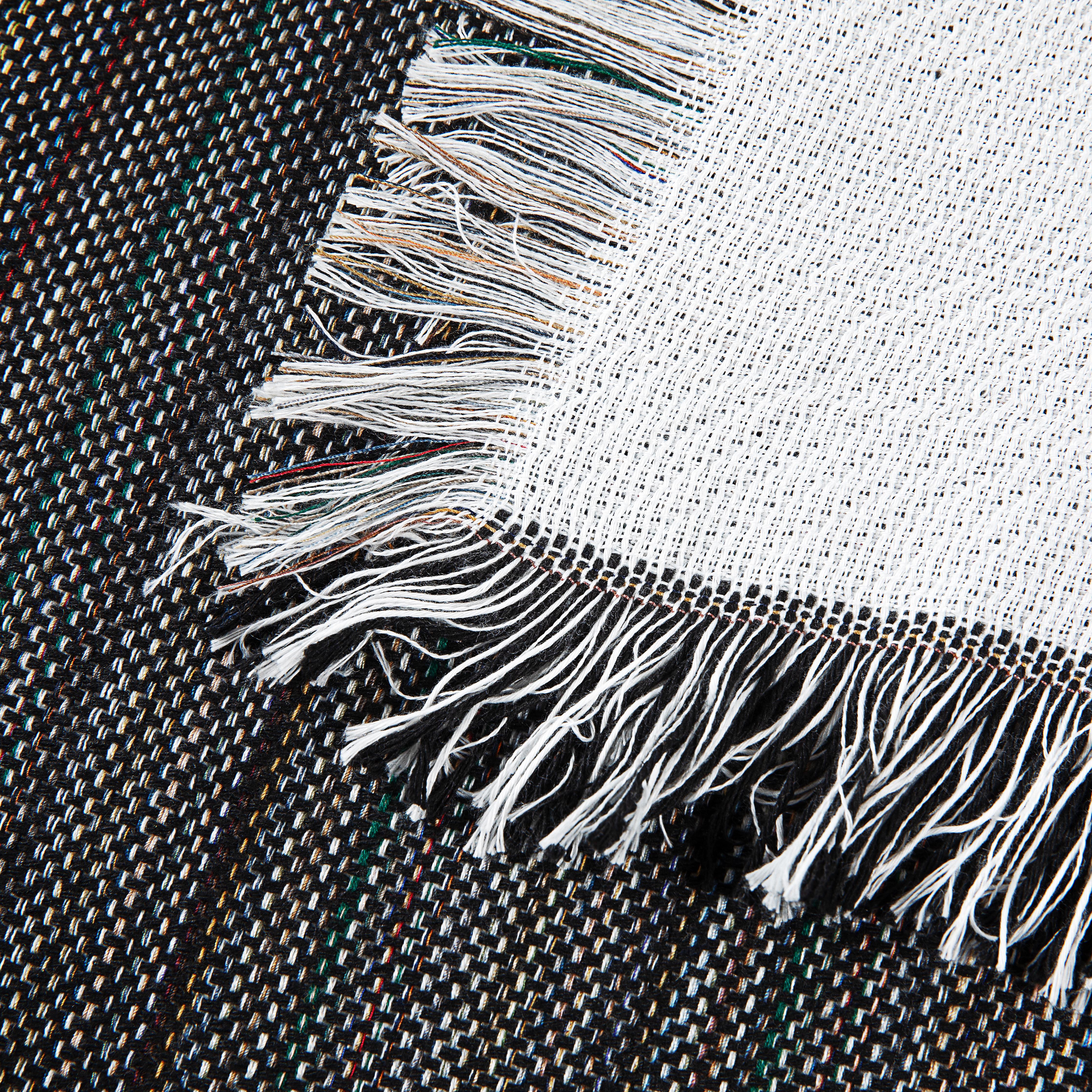
Our Custom Woven Tapestry Blankets have a completely different feel. The jacquard weave creates a stunning, intricate surface, but it's not smooth. This means your transfer's adhesive has to work its way into all the tiny peaks and valleys of the fabric to get a good grip.
With these tapestries, firm pressure is everything. You have to physically push the vinyl's adhesive down into the weave so it can form a permanent bond. A padded ironing board just won't cut it here; you need a solid, firm surface underneath.
We've also found that a more flexible type of HTV performs much better on these. Some vinyls are thick and stiff, while others are thin and pliable. That flexibility allows the transfer to really sink into the fabric's texture, giving you a result that looks and feels like it’s part of the tapestry itself, not just sitting on top.
Recommended Iron-On Settings by Fabric and Transfer Type
We always say "test, test, test," because every iron has its own quirks and every brand of vinyl is a little different. That said, having a solid starting point is a huge help.
The chart below is a quick reference guide we've developed for some of the most common pairings you'll encounter, including our own popular blanks.
| Fabric Type (Example) | Transfer Type | Iron Temperature Setting | Press Time | Peel Type (Hot/Warm/Cold) |
|---|---|---|---|---|
| Cotton/Poly Blend (T-Shirt) | Standard HTV | Cotton/Linen (~320°F) | 15-20 seconds | Varies (check instructions) |
| 100% Polyester Fleece (SBT Fleece Throw) | Standard HTV | Polyester/Wool (~305°F) | 10-15 seconds | Varies (check instructions) |
| Plush Polyester Sherpa (SBT Sherpa Throw) | Standard HTV | Polyester/Wool (~305°F) | 10-15 seconds (in bursts) | Varies (check instructions) |
| Woven Cotton/Poly (SBT Tapestry) | Flexible HTV | Cotton (~315°F) | 20-25 seconds | Varies (check instructions) |
| Cotton Canvas (Tote Bag) | Printable Paper | Cotton/Linen (~320°F) | 25-30 seconds | Usually Warm or Cold Peel |
Don't forget the most important detail: always check if your vinyl is a hot, warm, or cold peel! Peeling at the wrong time is a surefire way to ruin your project.
Getting comfortable with how you iron on transfers across these different materials will open up a new world of premium custom products for your business. It's how you turn beautiful blanks into brilliant, personalized best-sellers.
Troubleshooting Common Iron-On Problems
It happens to the best of us. You follow all the steps, your design looks incredible, and then... something goes wrong. A peeling edge, a stubborn bit of vinyl that won’t stick, or a scorch mark that makes your heart sink. Don't throw that blanket across the room just yet!
Most iron-on mishaps are totally fixable and, honestly, they're how we learn to get better. Let's walk through some of the most common frustrations and how to save your project.
The Dreaded Peel: Why Your Vinyl Is Lifting After a Wash
This is probably the number one problem people run into. You pull your beautiful custom fleece blanket from the laundry, and the design is lifting at the edges or peeling off entirely. It’s incredibly frustrating, but the culprit is almost always the same: not enough pressure.
Your household iron just doesn't have the weight of a professional heat press. To get that adhesive to truly melt and grab onto the fibers of a plush fabric, you have to put your back into it. We mean it—lean in with your body weight and give it some real force.
If you’re staring at a peeling design, here’s what to do. First, place your protective sheet back over the design and press the lifting sections again, but this time, apply significantly more pressure. Also, check your setup. If you're using a padded ironing board, ditch it. The padding just absorbs all that pressure you're trying to apply. Work on a sturdy table or the floor with just a folded towel for protection.
And one last thing: patience! Most heat transfer vinyl needs a full 24 hours for the adhesive to cure completely. Tossing it in the wash too soon is a surefire way to ruin the bond.
When the Vinyl Just Won't Stick at All
Sometimes the problem shows up right away. You press the design, and when you go to pull back the clear carrier sheet, the vinyl lifts right up with it.
Stop peeling! Seriously, put that carrier sheet right back down. Before you do anything else, grab the instructions for your specific vinyl. Are you supposed to do a hot peel (right away), a warm peel (after a few seconds), or a cold peel (once it's completely cool)? Peeling at the wrong temperature is a guaranteed fail. We've seen countless projects go wrong at this exact step.
If your timing is right, then it's an issue with heat or pressure. Remember, your iron has hot and cool spots, especially around the steam holes. You might have simply hit a cool spot or didn't press hard enough in one area. Just re-press the whole design for another 10-15 seconds, giving those stubborn spots some extra attention and firm pressure.
Fixing Wrinkled or Cracked Designs
There’s nothing worse than lifting the iron to find your perfectly smooth design is now a wrinkled, distorted mess. This almost always boils down to one of two things.
First, your fabric might have shifted or bunched up while you were pressing. Always make sure your blanket or tapestry is pulled completely flat and taut on your work surface before the iron ever touches it. The second, and more common reason, is sliding the iron. It’s a natural instinct from ironing clothes, but it will pull and stretch the hot, pliable vinyl, ruining your design.
The right way to do it is to press and lift. Place the iron down, apply firm pressure for the recommended time, then lift it straight up. Move to the next section, overlapping slightly, and repeat. Never slide the iron.
If the damage is done, you might be able to salvage it. Try covering it with your protective sheet and gently reheating the wrinkled area for just a couple of seconds. Sometimes this will relax the vinyl just enough for you to smooth it out with your fingers, but prevention is definitely the easier route here.
Help! I Scorched the Fabric
That moment when you lift your iron and see a faint brown outline on your pristine white polyester fleece can be terrifying. This is exactly why we stress using a protective sheet and starting with lower temperatures, especially on synthetics. A misplaced design can also cause you to press an area twice by mistake—this is where learning to use tools like heat resistant tape for sublimation and other projects becomes a real lifesaver.
If the scorch mark is light, don't panic. You might be able to fix it. A common trick is to gently dab the area with a cloth dampened with a bit of hydrogen peroxide. Always test this on a hidden spot first! On super plush fabrics like sherpa, you can sometimes get away with just fluffing the fibers with your fingers to hide a very minor mark.
How to Make Your Designs Last: Aftercare and Washing
Once the iron is off and cool, you're not quite done. The way you handle the garment in the next 24 hours—and in every wash after that—is the secret to a design that truly lasts. Getting this part right is what protects your hard work and keeps those plush textiles feeling amazing.
Think of the transfer adhesive like super-strong glue that's still setting. If you rush this final stage, you can mess up the bond you just worked so carefully to create. A little patience here goes a very long way.
The 24-Hour Rule: Don't Skip This
This is the most important rule in the book: wait at least 24 hours before washing the item. Seriously. This isn't just a friendly suggestion; it's a critical curing period for the adhesive.
During this time, the adhesive is finishing its job, creating a permanent bond with the fabric's fibers. Washing it too soon is the fastest way to get peeling or cracking, as you're interrupting the bond before it has fully formed.
As a small business, providing clear care instructions is a game-changer. It shows you’re invested in the product's quality long after it leaves your hands, which builds trust and cuts down on customer service headaches later.
Simple Washing and Drying for Long-Term Quality
When it's finally time for that first wash, a few simple habits will keep the design looking sharp and the fabric feeling soft. This is especially important for preserving the texture of our cozy fleece and sherpa blankets.
For Washing:
- Turn it Inside Out: For apparel like t-shirts, this is a must. It puts a layer of fabric between the design and the friction of the wash cycle. For a blanket, you can just wash it as is.
- Go Cold: Always use a cold water setting. Hot water is the enemy of heat transfers because it can soften the adhesive over time.
- Be Gentle: Stick to the gentlest cycle on your machine to minimize any stress on the transfer.
For Drying:
- Low Heat is Key: Your best bet is to tumble dry on a low or delicate setting. High heat can do just as much damage as a hot wash.
- Hang to Dry: If you want maximum longevity, hanging the item to dry is a foolproof alternative that completely avoids heat.
Taking durability seriously is what's fueling so much growth in this space. The heat transfer film market is currently valued at USD 2,808 million and is poised for major expansion, proving just how much customers value quality results. By combining premium films with high-quality blanks like fleece, creators can hit a 95% adhesion success rate that stands up to over 100 wash cycles. You can dig into more industry projections for the heat transfer film market to see where things are headed.
Answering Your Top Iron-On Transfer Questions
Over the years, we've seen the same questions pop up from makers and small business owners trying to get their projects just right. Let's clear up some of the most common hurdles so you can achieve those crisp, professional results you're after.
Can I Really Get Good Results With a Household Iron?
You absolutely can. Don't let anyone tell you that you need a heat press to get started with iron-on transfers. A standard household iron is more than capable of creating beautiful, lasting designs.
The real trick is learning how to mimic what a heat press does: deliver consistent heat and pressure. Crank your iron up to the cotton/linen setting, make sure the steam is completely off, and get ready to put some muscle into it. While a press is definitely better for big batches, your home iron is the perfect tool for getting started.
Why Is My Design Peeling Off After I Wash It?
Ah, the dreaded peeling vinyl. We’ve all been there. If your design is lifting after a wash, the problem is almost always a lack of one of three things.
More often than not, the culprit is pressure. You have to press down hard—use your body weight to create a strong bond that a simple glide-over won't achieve.
The Big Three of Peeling Vinyl:
- Not enough pressure: Lean into it! Firm, even pressure is non-negotiable.
- Not enough heat: Make sure your iron is fully heated to the right setting for your material.
- Not enough cure time: You must wait a full 24 hours before that first wash. The adhesive needs time to fully set and bond with the fabric fibers.
Tackle those three points, and you’ll fix 99% of peeling issues.
How Do I Keep From Melting Delicate Fabrics like Sherpa?
Working with plush, delicate materials like sherpa or fleece can feel intimidating, but it’s all about control. The secret is creating a barrier and managing your heat.
Always, always use a protective layer. A Teflon sheet or even a clean sheet of parchment paper placed between your iron and the transfer is essential. This protects the sensitive fibers from direct, scorching heat.
Next, dial back your iron's temperature to a polyester or wool setting. Instead of one long press, apply heat in shorter bursts of 10-15 seconds. This gives the adhesive enough heat to activate without melting or damaging the beautiful texture of the fabric.
Ready to turn those blank canvases into something brilliant? Spark Blank Textiles has the premium, print-perfect blankets and towels your custom designs have been waiting for. Explore our curated selection and start creating.